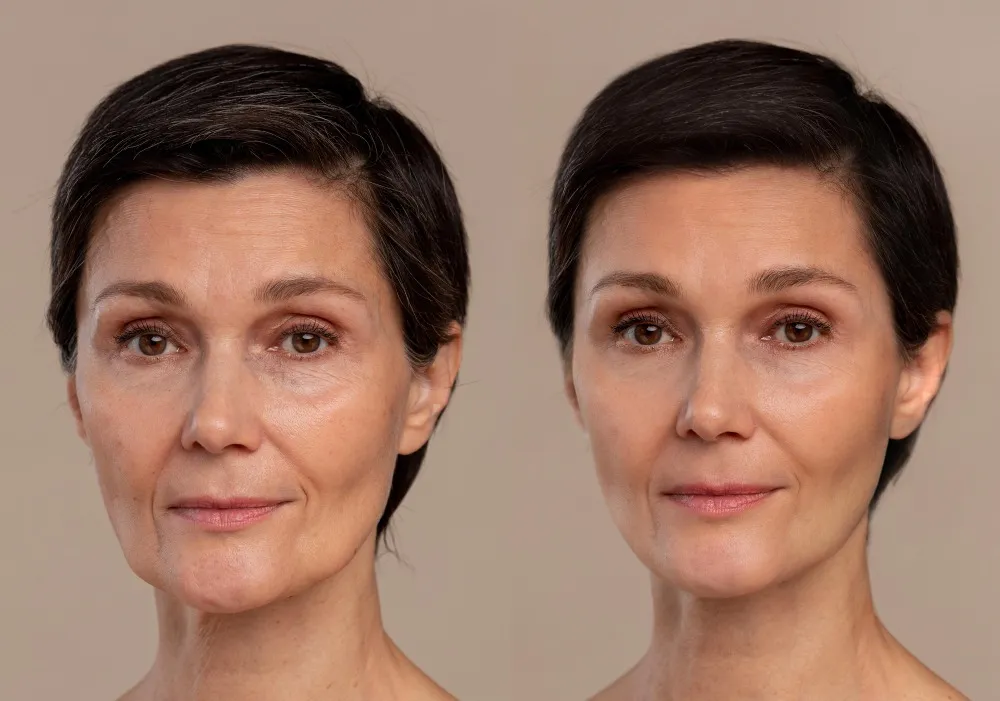
People seeking facial rejuvenation often face a confusing choice between facelift surgery and non-surgical treatments. Curls & Curves Cosmetic Surgery Center in Bengaluru provides an individual assessment with Dr Girish to determine whether the main concern is loose skin, reduced facial volume, wrinkles, jowls, or a combination of age-related changes.
Neither approach is universally better. The right choice depends on what has changed, how much correction is required, and whether the person is comfortable with surgery and recovery.
What a Facelift Can Correct
A facelift is designed primarily to address sagging tissues in the lower face. Depending on the surgical plan, it may improve:
- Loose skin along the jawline
- Jowls that reduce jaw definition
- Deep folds between the nose and mouth
- Downward movement of cheek and facial tissues
- Laxity around the lower face
- Certain signs of ageing near the upper neck
Facelift surgery does not automatically treat every facial concern. Fine surface lines, pigmentation, skin texture, forehead drooping, and eyelid concerns may require separate or complementary treatments.
What Non-Surgical Treatments Can Do
Non-surgical facial treatments may include injectables, energy-based procedures, skin resurfacing, or other minimally invasive options. Their purpose varies.
Some treatments restore lost volume, while others soften expression lines or improve surface texture. They may suit people with early ageing changes who want limited correction and less downtime.
However, a non-surgical treatment cannot remove a substantial amount of loose skin or reposition deeper facial tissues to the same extent as surgery. Repeated procedures may also be necessary to maintain the effect.
Facelift Versus Non-Surgical Rejuvenation
The following factors can make the decision clearer.
Degree of sagging
Mild volume loss or early lines may respond to non-surgical care. Pronounced jowls, deeper folds, and significant tissue descent are more likely to require surgery for a noticeable structural correction.
Recovery preference
Non-surgical procedures generally involve less downtime, although swelling, bruising, or temporary sensitivity may still occur. Facelift surgery requires a planned recovery period and follow-up care.
Duration of improvement
Non-surgical results are usually temporary and depend on the treatment used. Surgical improvement can last longer, but the natural ageing process continues.
Type of result expected
A facelift aims to reposition and support facial tissues. Non-surgical treatments generally create more limited changes through volume restoration, muscle relaxation, skin renewal, or tissue tightening.
What Makes a Facelift Look Natural?
Natural-looking facial rejuvenation depends on respecting the person’s facial proportions. The objective is not to create an overly tight appearance or make every line disappear. Effective planning focuses on restoring definition while preserving recognisable features and normal facial expression.
During evaluation, the surgeon should examine facial structure, skin quality, hairline, previous procedures, scars, and areas of volume loss. Photographs may be used to document concerns and support realistic planning.
Planning Treatment in Bengaluru
Patients should account for more than the procedure date. Time away from work, assistance at home, follow-up appointments, and travel through Bengaluru should be included in the recovery plan. Smoking, uncontrolled medical conditions, and certain medicines may affect surgical suitability or healing.
A consultation should also clarify whether a facelift alone can address the concern. Eyelid surgery, fat grafting, or another targeted procedure may sometimes be discussed, but additional treatment should only be considered when it serves a clear purpose.
If facial sagging is affecting your confidence and you are unsure whether surgical or non-surgical treatment is appropriate, arrange a consultation with Dr Girish at Curls & Curves Cosmetic Surgery Center in Bengaluru for a personalised evaluation.
Keywords