Breast augmentation is a cosmetic surgical procedure designed to increase breast volume, improve shape, or restore fullness that may have changed due to weight loss, pregnancy, ageing, or natural development. Women considering breast augmentation in Bengaluru often begin with questions about implant choices, surgical safety, recovery, and whether the procedure can produce natural-looking results.
The operation is highly individual. An implant that suits one person may not complement another because body proportions, existing breast tissue, skin elasticity, chest width, and personal expectations differ.
What Can Breast Augmentation Address?
Breast augmentation may be considered when a person wants to:
- Increase naturally small breast volume
- Restore fullness after pregnancy or breastfeeding
- Correct noticeable differences between the breasts
- Improve breast proportion following significant weight loss
- Reconstruct breast volume after certain medical treatments
- Achieve better balance between the upper and lower body
The procedure increases volume, but it does not always correct significant sagging. When loose skin or downward-pointing nipples are present, a surgeon may discuss whether augmentation alone or augmentation combined with a breast lift would be more appropriate.
Understanding Breast Implant Choices
Breast implants vary in their filling material, shape, size, projection, and surface characteristics. Silicone gel implants are widely selected because their texture can resemble natural breast tissue. The suitability of any implant depends on the patient’s anatomy and the surgeon’s assessment.
Size should not be chosen only by cup-size expectations. During planning, factors such as shoulder width, chest dimensions, available breast tissue, lifestyle, and skin quality help determine a proportionate option.
Implants may be positioned above or below the chest muscle, with each approach offering different advantages. Placement beneath the muscle can provide additional tissue coverage in women with limited natural breast tissue. Placement above the muscle may be suitable in selected cases with adequate coverage. The final decision requires a clinical examination.
What Happens During the Procedure?
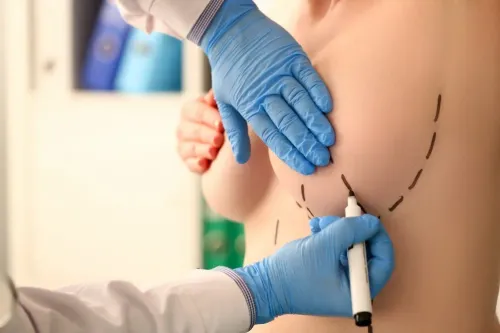
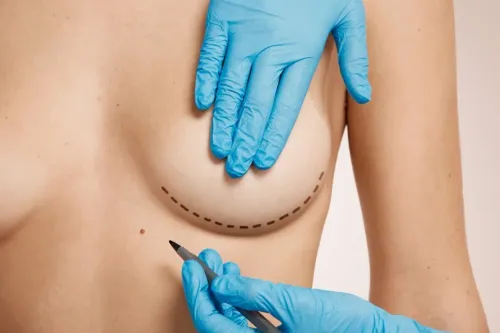
Breast augmentation is generally performed under anaesthesia. The surgeon creates an incision, forms a carefully planned pocket, inserts the implant, checks its position, and closes the incision.
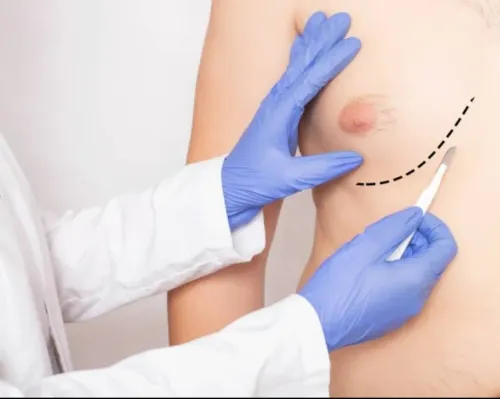
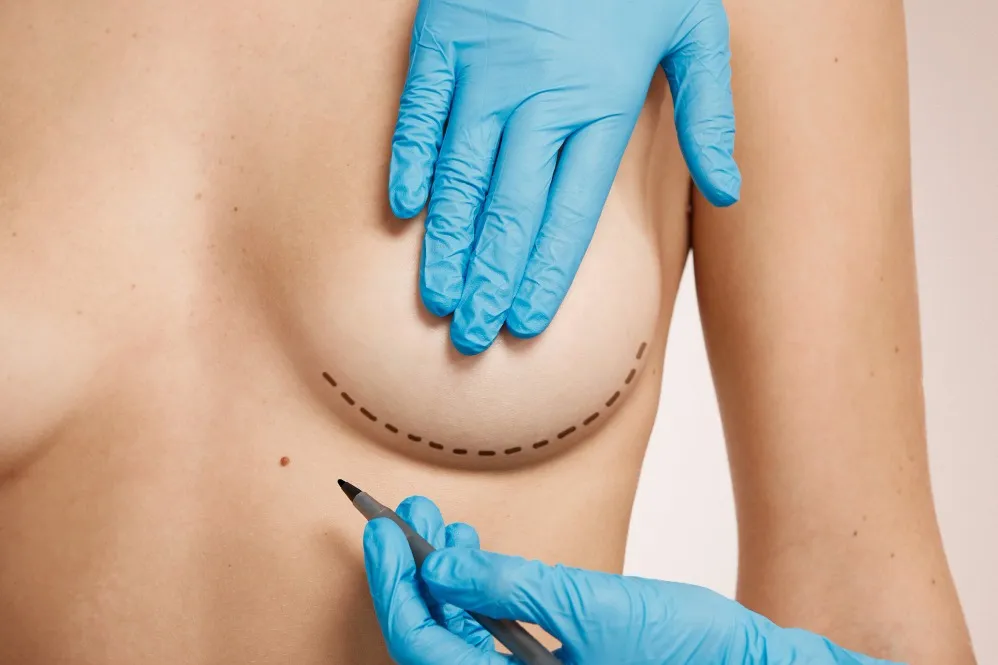
Incisions may be placed in the fold beneath the breast, around part of the areola, or occasionally near the underarm. The chosen location depends on the implant, anatomy, surgical plan, and the need to keep the scar as discreet as reasonably possible.
At Curls & Curves Cosmetic Surgery Center, Dr Girish evaluates breast dimensions, tissue coverage, symmetry, and skin condition before discussing a personalised surgical plan.
Recovery After Breast Augmentation
Swelling, tightness, soreness, and temporary changes in sensation can occur during the early recovery period. A supportive surgical garment may be recommended to reduce unnecessary movement and support healing.
Many patients can resume light daily activities gradually, although strenuous exercise, heavy lifting, and upper-body workouts usually need to be avoided until cleared by the surgeon. Recovery time varies according to implant placement, surgical technique, general health, and the nature of the patient’s work.
People travelling across Bengaluru or from other parts of Karnataka should account for follow-up appointments when planning time away from work.
Questions Worth Asking at a Consultation
A well-informed consultation should cover:
- Whether augmentation alone can meet the desired goal
- The recommended implant type, volume, and projection
- Where the implant will be placed
- The likely location of the incision
- Expected scars and recovery milestones
- Possible risks and future implant monitoring
- How pregnancy or weight changes may affect results
Breast implants are not necessarily lifetime devices, so future monitoring and the possibility of revision surgery should be understood before proceeding. Choosing surgery after a complete evaluation and realistic discussion helps ensure that the decision is based on anatomy, safety, and long-term expectations rather than size alone.
Keywords