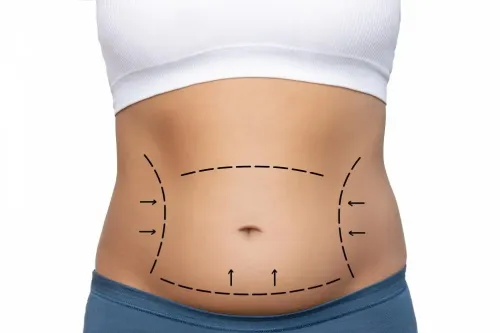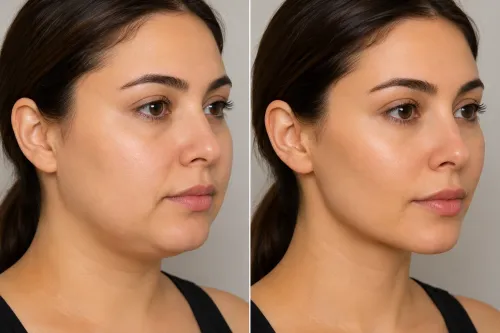

A tummy tuck, medically known as abdominoplasty, reshapes the abdominal area by removing excess skin and, when required, tightening weakened or separated muscles. It is often considered after pregnancy, major weight loss, or changes in skin elasticity that leave the abdomen loose despite regular exercise.
Although frequently grouped with fat-reduction procedures, a tummy tuck is not intended to produce general weight loss. Its primary purpose is to address structural concerns that lifestyle changes cannot fully correct.
Problems a Tummy Tuck May Address
Abdominoplasty may be considered for one or more of the following concerns:
- Loose or hanging abdominal skin
- A fold of skin after substantial weight loss
- Abdominal muscle separation following pregnancy
- A persistent lower-abdominal bulge
- Stretch marks located on skin that can be removed
- Poor abdominal contour despite stable weight
- Skin irritation beneath an abdominal fold
Not everyone with a prominent abdomen requires a tummy tuck. The fullness may come from subcutaneous fat, fat around internal organs, bloating, posture, muscle separation, loose skin, or a combination of these factors.
Tummy Tuck, Liposuction, and Weight Loss
These three approaches solve different problems.
Liposuction removes selected deposits of fat but does not remove a significant quantity of loose skin. A tummy tuck removes excess skin and can repair separated abdominal muscles. Medical or lifestyle-based weight loss reduces overall body weight but may leave stretched skin behind.
Some patients benefit from liposuction alongside abdominoplasty when stubborn fat affects the waist or surrounding areas. Combining procedures is not automatically suitable for everyone; the treatment plan must account for health, tissue condition, surgical extent, and recovery demands.
What Happens During Abdominoplasty?
The operation is generally performed under anaesthesia. An incision is commonly placed low on the abdomen, allowing it to be concealed by many styles of underwear. Excess skin is released and removed, while weakened or separated muscles may be brought together when indicated.
In a full tummy tuck, the skin around the navel is repositioned to maintain a natural abdominal appearance. The precise incision length and amount of correction depend on how much loose tissue is present.
A permanent scar should be expected. Its position can be planned carefully, but final scar quality varies from person to person.
Recovery Requires Preparation
Tummy tuck recovery is more involved than recovery from a minor skin or fat-removal procedure. Tightness, swelling, bruising, temporary numbness, and difficulty standing completely upright can occur initially.
Preparation may include:
- Arranging help with children and household duties
- Creating a comfortable resting area
- Planning leave from work
- Avoiding lifting and strenuous exercise
- Following instructions for garments, wound care, and walking
- Attending scheduled follow-up appointments
People seeking tummy tuck surgery in Bengaluru should factor in commuting time and local travel conditions. Long journeys immediately after surgery may be uncomfortable, making nearby support and reliable transport valuable.
Who May Need to Postpone Surgery?
A tummy tuck may not be appropriate when a person is planning a future pregnancy, actively losing substantial weight, or managing an uncontrolled medical condition. Smoking or nicotine use can also interfere with healing and must be discussed openly.
At Curls & Curves Cosmetic Surgery Center, Dr Girish evaluates abdominal skin, fat distribution, muscle separation, scars from earlier operations, medical history, and future plans before explaining possible options.
The most suitable candidate is generally healthy, near a sustainable weight, and clear about what surgery can achieve. A tummy tuck can improve abdominal contour, but it cannot prevent later changes caused by pregnancy, ageing, or major weight fluctuation. Understanding that distinction creates a stronger foundation for an informed decision.
Keywords